Sunday, July 19, 2015

Dingle Peninsula - Annascaul

                  Map of Dingle Peninsula with portraits of local celebrities
                Playful paintings on a building of unknown purpose on way out to     Annascaul Lake


This would be my last day before Dingle Town where I continued on my previously planned route.  I had to cancel other B&Bs because they could only be reached by walking; buses only ran one day per week (giving a good idea of how isolated were the locations.)  Today was the first "Irish weather" day of rain & wind, but I, of course, loved it.

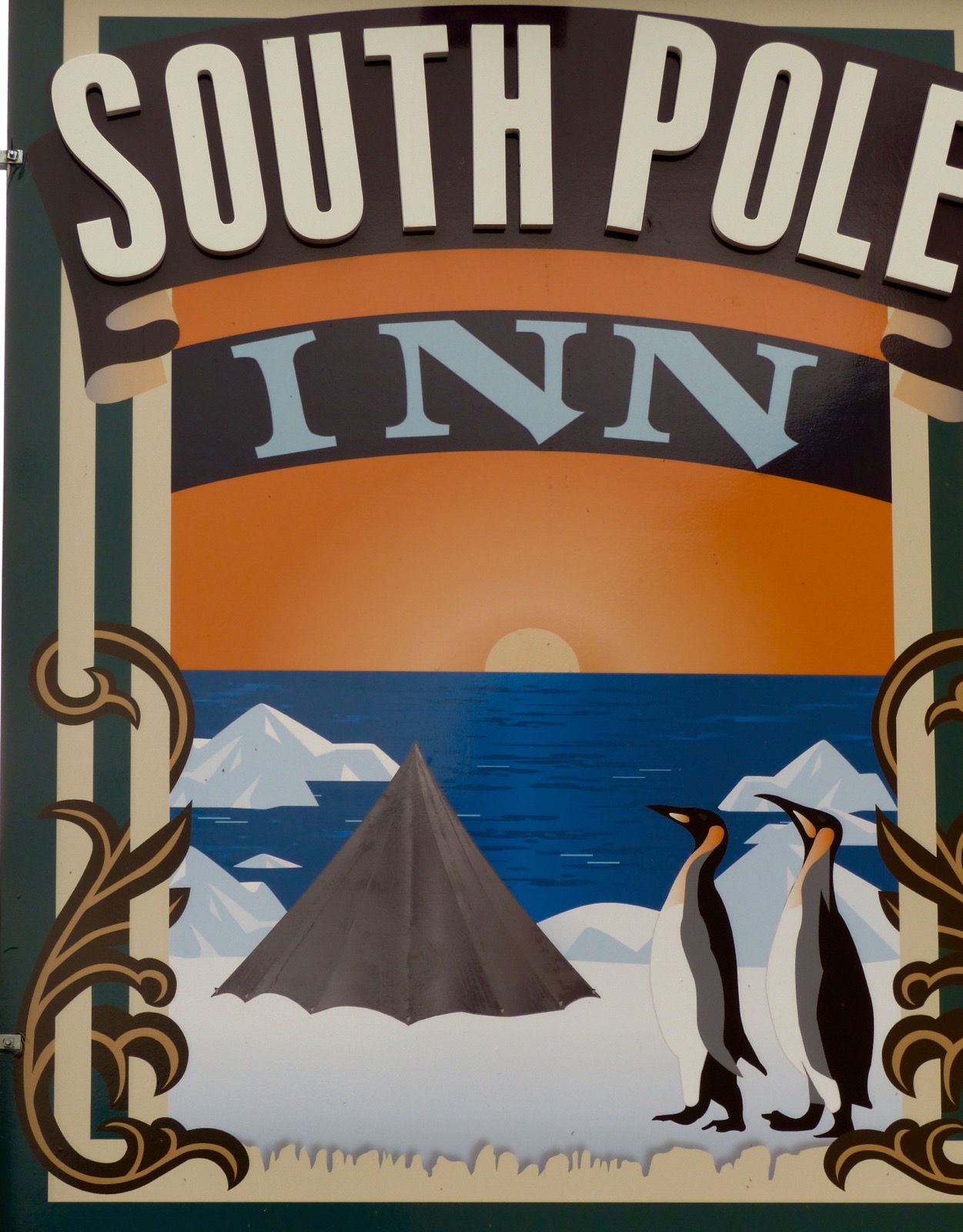
So after leaving Camp Junction, I took the bus to Annascaul where I spent the day hiking to Annascaul Lake. This is a "wee town" as the Irish would say, but which is famous for one of its past residents, Tom Crean, an Irish seaman who was a member of three major expeditions to Antartica including Scott's Terra Nova Expedition (ending in the death of Scott and his polar party) as well as Shackleton's Endurance expedition. After Shackleton's ship became stuck in the ice and sank, the crew spent months adrift on the ice and undertook a journey in lifeboats to Elephant Island. Upon reaching South Georgia, Crean was one of three who made the first land crossing without maps or proper mountaineering equipment. After these perilous voyages, he returned to his native town of Annascaul where he and his wife opened the South Pole Inn pub (photos to follow.)

I took comparatively short hike out to Annascaul Lake while enjoying the mist and listening to medieval music from the Camino.  Now eating pizza & maybe pub music later. Life is good. 
                       Statue of the explorer located in the village square.

                 Sign outside the restaurant/pub that Crean & his wife founded.
Photo of the explorer seen all over Dingle Peninsula.  There was also an entire exhibit dedicated to him at the Kerry County History Museum in Tralee, but I did not visit it.  Not enough time.


Tuesday, July 7, 2015

Dingle: Camp Junction

After a long and informative day in Tralee, I took the bus to where I would have walked on day 1 of the Dingle Way trek, Camp Junction.  Arrived around 6:30 and since it stays light until around 11pm, I had sufficient time for walk on the beach by the Irish Sea, to have dinner with some folks from Britain who had just completed the entire tour, and then to enjoy some "craic" (Gaelic for friendly chat) with two local Irish families.  All completely delightful!

                            This was my B&B in Camp Junction.


             Old pub from the late 1800's with me as the bartender (not really).
One of the families I chatted with in the pub.  Delightful pre-teen girl, mother, father & grandmother.  All inquiring as to how I liked my stay in their country.
                                    Another friendly group.

Still Tralee

Two other very well organized and informative exhibits at the Kerry County Museum: one a special exhibit called "Kerry Lives: 1950-70" by photographers Padraig and Joan Kennelly.  This focused on transformation from a highly rural society where 50% of the homes did not have ANY kind of toilet in 197, secondary school was only available for the well-to-do, and where Kerry lost 22% of its population to emigration due to economic necessity.  Dancing was a national passion in spite of the Bishop of Kerry criticizing it because late dances made people unfit "for a day's work that begins 3 or 4 hours later."  But the people refused to relinquish their dances with Kerry having 830 dances in 1955!

The second exhibit was called the "Medieval Experience" where the Tralee of the Middle Ages was recreated.  By the end of the 17th century, only a few of the original architectural stones survived.


Tralee, County Kerry (continued)

For reasons that are unclear, this blog app closes me out after a certain length, making it impossible to either add content or edit and make corrections.  So then I just have to start a new post.  Oh well.

So, the Celts predominated the culture here until the arrival of Christianity in about 500 CE.  The were the first iron-using Europeans and it is Celtic Art that is most enduring. Since the Romans never invaded Ireland, Celtic culture here remained intact longer.  The period of 500 BCE to 500 CE is when the large stone forts were likely built as well as when the first Irish script was developed.  After Christianity arrived in the 5th century until around the year 1200 was the period when the great monastic settlements were founded.  People lived in defended homesteads known as ring forts, circular enclosures of stone and earth.  The Viking raids of the 8th and 9th centuries eventually led to Viking settlements in the 10th century.


Ireland Part 3 - Dingle Peninsula - County Kerry

After completing seven days of walking the Wicklow Way (approximately 130 kilometers & the last two days did not make this blog), I made my way by bus and train to Tralee, the starting point for walking the Dingle Way.  After such a long trek through rural landscapes, it was a pleasure to get to the colorful town of Tralee with its huge public gardens and colorful architecture.  I stayed in a Victorian home turned hostel & tearoom and explored the town on foot.  The first evening, I attended a completely mesmerizing performance at the Siasma Tíre, the National Folk Theater of Ireland.  I had not heard anything about this group but serendipitously stumbled upon it because they were playing haunting Celtic music.  Unlike some folk performances for outsiders, there was nothing kitschy about this one.  It was titled "Turas: A Breathtaking Journey of Music, Dance and Song'" and it was indeed fabulous.  In fact, the combination of music, dance and visuals reminded me of the first time I saw Cirque de Soleil doing their performance "O."  The first half of the show was five musicians accompanying three amazing Irish dancers (not one bit like "Riverdance") altering between high energy rigs and haunting Gaelic songs.  My favorite moment in the second half of the performance was a fairy-like girl (where did they find these incredibly talented young women with long golden hair who looked exactly like the mythical fairies?) singing a beautiful song in Irish while old black and white film clips of Irish dancers of the early 20th century played in the background.  Nothing could have communicated more clearly the importance of this dance in Irish culture.  At one point the dancers performed to some Irish tunes that resembled a lending of traditional music with jazz.  Amazing. Unfortunately no photos permitted.

I woke up the next day really acknowledging how painful my blisters were, and decided that I had to rethink walking the Dingle Way.  Consultation with tourist office and some phone calls later, I had a plan to bus/day walk through Dingle.  I spent the rest of the day at the Kerry County History Museum which had great exhibits on both the history of County Kerry, and the Republic of Ireland as well as a an exhibit called  "The Medieval Experience," which was an effort to allow the visitor to be immersed in the medieval town of Tralee.

The Museum Gallery covered the history of  the earliest settlers (8000-4000 B CE), beginning of agriculture around 4000 CE, and moving forward to the arrival of the Celts who were the earliest users of iron.

Friday, July 3, 2015

Day 5 - Wicklow Way - To Moyne

Today was the first day I walked the entire day with another person when I walked with Stefanie, a woman from Germany who lives and works in Dublin.  Her husband was at a music festival in Denmark, so she decided to do this trek alone as did I.  It was a nice change to chat with someone during a pretty long day (about 25 kilometers) and she also got me to speed up quite a bit.  From this point on, there is no spectacular scenery, but I am enjoying hill walking through rural areas.  We stayed in a nice B&B, and I had the best meal thus far on the trek, cooked by the owner of the inn.  However, the result of faster walking was that I was barely able to remain awake through dinner, had quite a aching legs, and went to bed early.  I decided not to carry a camera due to blisters and a wish to lighten the weight, so no photos.

Thursday, July 2, 2015

Day 4 - Wicklow Way to Glenmalure

I am now guessing that the word "glen" refers to valley, so I am again in a very small town in a valley.  Today's walk was quite pleasant: about 16 or 17 kilometers through mountains and forest.  This town has no signal and the hotel across from my B& B has wifi, but only in the reception area, so I still will not be able to upload any photos.  Had some nice company today: a young, very well-informed, couple from Belgium, a British man, and a nice woman from Germany--all staying here in Glenmalure.  The really exciting bit of news for me is a traditional music session tonight at the hotel. Then tomorrow I walk to Moyne.